
Shipment operations · Freight forwarder
Container waiting at a transshipment port: check the onward sailing
Read transshipment events, verify assignment to the next vessel and obtain an onward plan with clear uncertainties.
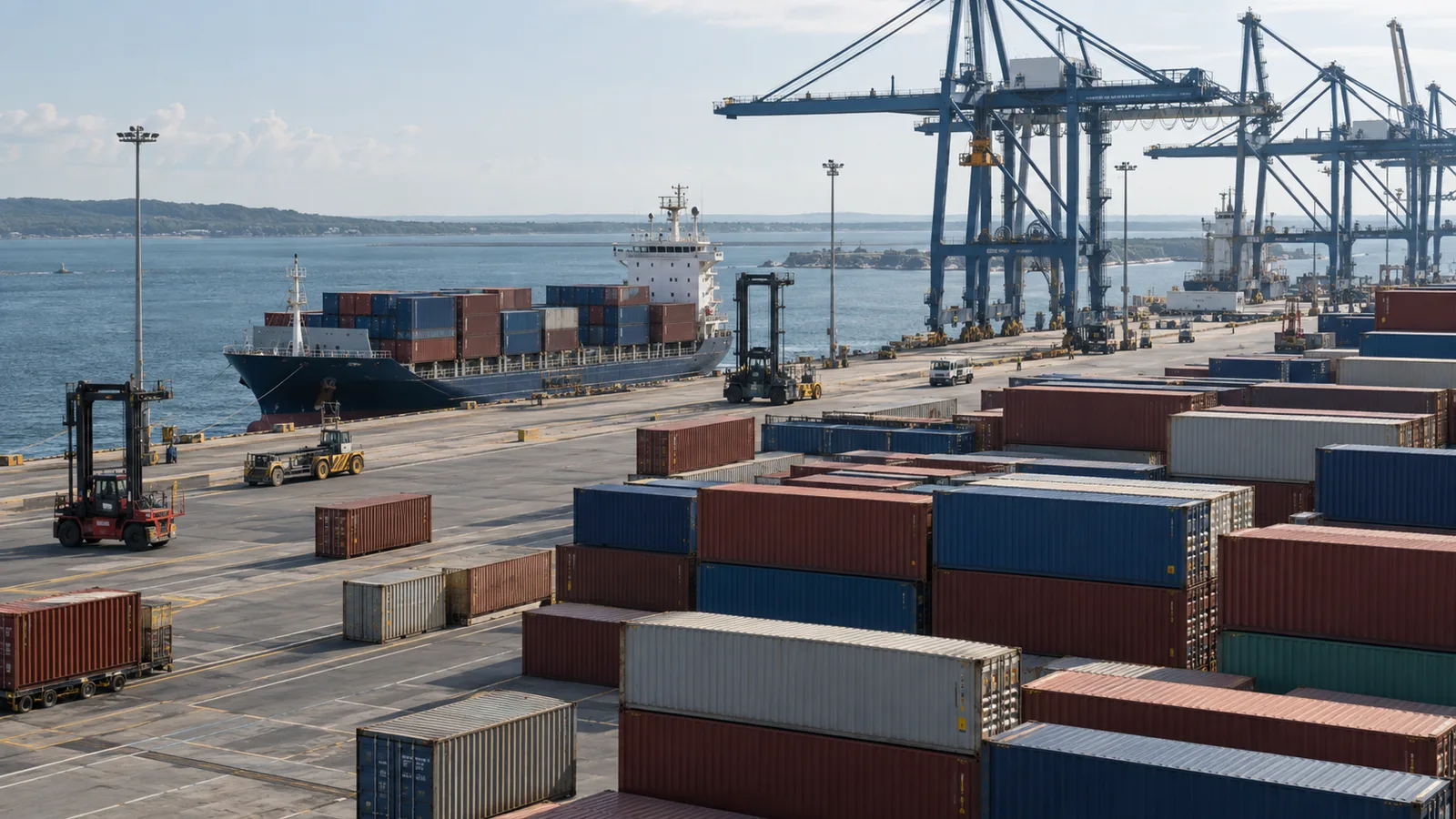
Separate completed, planned and unconfirmed events and prepare connection-specific questions.
A “transshipment” status does not tell you when the onward journey will begin. It may identify the stage where the container changes vessel. To assess delivery, establish what has happened, what is planned next and whether your unit is assigned to that plan.
Do not infer a disruption merely because the route includes transshipment. Compare current information with the plan accepted for this shipment first.
Separate vessel routes from container events
A vessel schedule describes a transport plan. A container history concerns the individual unit. Reconcile the two views.
Hapag-Lloyd's local guidance describes separate vessel and container tracking. This is a carrier-tool example, not a Cargexo function or a guarantee that every system provides complete data.
When another vessel name appears, ask whether it represents a planned connection or a confirmed container assignment. The vessel departing does not prove it carried your unit.
Four questions for an update
| Question | Required answer |
|---|---|
| What has happened? | Last actual event, location and time |
| What is planned next? | Vessel, voyage, port and estimated date |
| What is confirmed for this unit? | Assignment or connection-acceptance status |
| What remains unknown? | Open issue, answer owner and next check |
Record event time and information-retrieval time where different. A morning update may describe yesterday's operation. Otherwise a delayed data entry can be mistaken for a delayed physical move.
A fictional timeline
Assume the first-leg vessel arrives on D0 and container discharge is confirmed on D1. The next voyage is scheduled to depart on D4. On D2, the customer asks whether the container will definitely sail.
You have evidence of discharge and a proposed connection. You do not yet have evidence of loading on the second vessel. Explain both levels and identify who will confirm the onward plan.
If D4 brings only a vessel-departure event, still verify the container event. Do not replace missing confirmation with an assumption. If a different voyage is assigned, record the revision and its downstream effect.
D0–D4 are training labels, not a typical transshipment waiting period.
Check the whole remaining route
Request the next connection and updated plan to the discharge port. Include every further transshipment. A delay on one leg does not necessarily produce an identical delay at the end; the revised connections determine the assessment.
Separate the ocean plan from post-discharge availability, releases and inland delivery. Do not automatically move the warehouse appointment by the difference between two ETA versions without checking collection arrangements.
Ask for an explanation or alternative when needed
If a connection was missed or no new assignment exists, ask about the change using the container number and last confirmed fact. Avoid “why is nothing happening?” when current status has not been established.
For goods with particular handling requirements, restate the agreed conditions and request confirmation that they remain supported. Do not independently choose new equipment settings or handling methods.
If an alternative is necessary, request feasibility, required approvals, cost and change scope. Do not promise a new port or carrier before the coordinator confirms that it can be done.
Define the next check
Tie the next update to connection acceptance, loading, departure or a scheduled status check when no update appears. Assign responsibility.
Cargexo can support planning or cost calculations using supplied data; this article does not provide live container tracking. Obtain operational events from the relevant carrier or operator.
Checklist
- Container number and transshipment port are confirmed.
- The latest actual event has a time and source.
- Vessel name is distinguished from container acceptance.
- The plan covers remaining connections and discharge port.
- ETA has not become a firm warehouse-delivery promise.
- The next update has a time or a defined trigger.
Enquiry to copy
Container [number], booking [reference], transshipment port [port]. Last confirmed fact: [event, time, source]. Please provide the next vessel and voyage, planned date and assignment status for this container. Distinguish actual and planned events and explain the effect on further connections and destination-port ETA. If the plan is unconfirmed, identify the outstanding issue and next update time.
Sources and scope
- DCSA — Track & Trace standard documentationSource checked: 2026-09-13
Transport-event data standard, not a promise of complete carrier data. Read planned and actual events with their location, source and update context.
- Hapag-Lloyd — Germany local information FAQSource checked: 2026-09-13
Carrier FAQ: tracking, release and empty-return instructions. Local procedures and deadlines are not universal port rules.
- Maersk — Terms for CarriageSource checked: 2026-09-13
This carrier’s carriage contract, subject to applicable law. Tariff, procedures, liability and claims cannot be inferred from the freight price alone.
Editorial information
Author: WR
Published · Published: 13/09/2026 · Content updated: 13/09/2026