
Getting started · Exporter
Your first sea freight export: prepare before the port
Cargo being ready does not mean the shipment is ready.
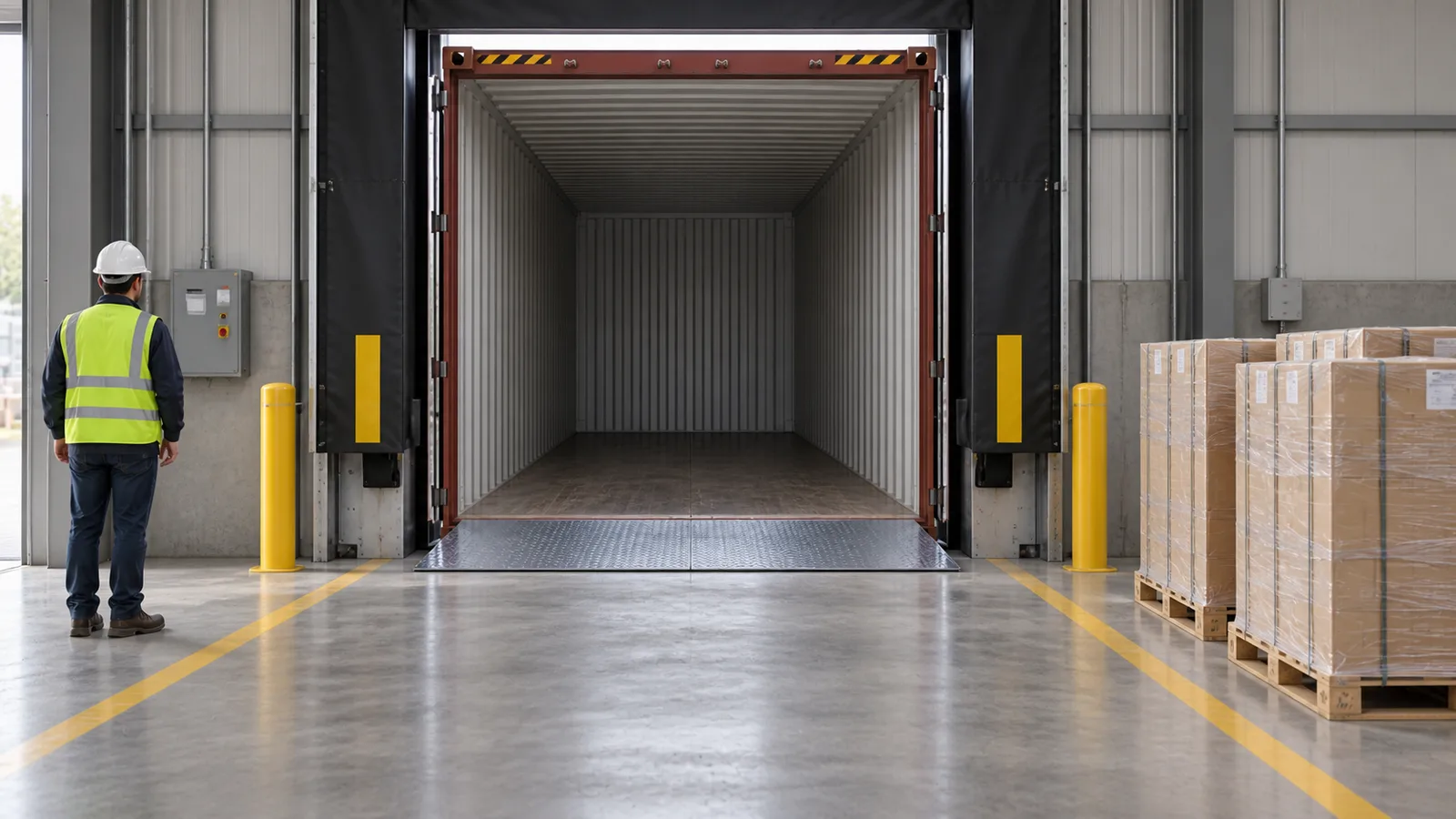
You can assign tasks to the exporter, warehouse and forwarder and confirm booking, loading, documents and deadlines.
Cargo being ready does not mean the shipment is ready. Before positioning a container, you need a confirmed booking, an agreed loading plan, document data and deadlines the warehouse can actually meet. For a first export, work backwards from the terminal delivery deadline to the time by which all goods must be packed.
This sequence concerns a typical full-container shipment. Export formalities depend on the country of departure and the goods. For exports from the EU, confirm the customs procedure with the person responsible for filing; do not automatically apply the same document list to another country.
Establish what is actually ready
Confirm the final package count, dimensions and gross weight. Separate production completion from readiness for collection: quality checks, packing, palletising and documents may take additional time. Quote the date when the carrier can collect the complete packed shipment, not the expected completion of the last production step.
Ask the warehouse about its dock, ability to handle the selected equipment, loading sequence and working hours. Confirm who will arrange cargo securing. A geometric layout helps show positioning but does not specify lashing methods or acceptable loads. Special cargo needs a separate handling agreement.
Check the booking before collecting the empty container
A booking reserves transport. Check its reference, container type and quantity, ports, service, vessel and voyage, equipment collection instructions and cut-offs. Request missing details. A general statement that space is available does not provide enough information for the driver and warehouse.
Agree who arranges empty-container collection and which depot releases it. Confirm the instructions’ validity and whether collection falls within the applicable equipment-use conditions. Collecting too early may generate charges before cargo is loaded. Do not assume every carrier counts free days in the same way.
Allow for equipment inspection at collection and before packing. Report damage, contamination, moisture or door problems before work begins. Decide who can request a replacement and which evidence the warehouse must retain.
Separate document deadlines from physical deadlines
SI means Shipping Instructions: the information used to prepare the transport document. VGM, Verified Gross Mass, is the verified gross mass of the packed container. The terminal cut-off is the acceptance deadline specified for the booking. They may fall on different days and at different times.
For carriage covered by SOLAS, VGM must be available sufficiently early for the vessel stowage plan. It is not the net weight of the goods. Agree the weighing method, responsible party, submission channel and acknowledgement. Sending a form is not proof that the carrier accepted the information.
| Task | Assign a responsible party | Evidence |
|---|---|---|
| Final shipment data | Exporter and warehouse | Packing list matching the packed shipment |
| Empty-container collection | Inland transport organiser | Current instructions and depot |
| Packing and securing | Warehouse / appointed contractor | Equipment check and loading records |
| SI and document draft | Exporter with forwarder | Checked and approved draft |
| VGM | Party responsible under the carriage requirements | Result and acceptance confirmation |
| Terminal delivery | Inland transport organiser | Container gate-in confirmation |
The table does not replace the contract. Name people and substitutes. A forwarder submitting information on the exporter’s behalf still needs correct data in the agreed format and on time.
Allow time for corrections
Illustrative working sequence: day A — complete packed cargo and checked SI draft; day B — equipment collection and loading; day C — VGM submission and terminal delivery. This only illustrates sequencing. Actual cut-offs may require another order, earlier SI or a different weighing arrangement.
Do not schedule every task for the final hour. A late truck, incorrect seal number or consignee correction may require several parties to act. If a deadline is at risk, share confirmed facts and ask which alternative is accepted. Do not send a driver to the terminal on the assumption that a late container will be admitted.
Message to the warehouse before loading
Please confirm for shipment [reference]: readiness of the complete shipment, package quantity and dimensions, gross weight, availability to load container [type] on [date and time], and the person coordinating loading. Confirm the container inspection process, cargo-securing contractor, VGM arrangements and seal-number records. We will provide the SI, VGM and terminal cut-offs from the booking confirmation. Report shipment changes before loading starts.
After loading, collect the packing list, container and seal numbers, loading records and submission acknowledgements. Check both terminal acceptance and actual vessel loading. These are separate events: confirmation of one does not establish the other.
Sources and scope
- IMO — Verification of the gross mass of a packed containerSource checked: 2026-09-13
SOLAS VI/2, applicable requirement from 1 July 2016. The shipper provides verified gross mass including tare, packaging and securing material; VGM does not guarantee vessel space.
- IMO/ILO/UNECE — CTU CodeSource checked: 2026-09-13
2014 code of practice for packing cargo transport units. Inspection, packaging and securing are distinct from geometric fit; the code is not approval of a particular shipment.
- European Commission — Additional customs clearance documentsSource checked: 2026-09-13
European Commission guidance on commercial and transport documents. Their functions differ; applicable requirements depend on goods, country and procedure.
Editorial information
Author: WR
Published · Published: 13/09/2026 · Content updated: 13/09/2026