
Cargo and equipment · Exporter
Container seals: checking numbers and handling discrepancies
Check a container seal against the documents, record discrepancies and agree the next steps before opening.
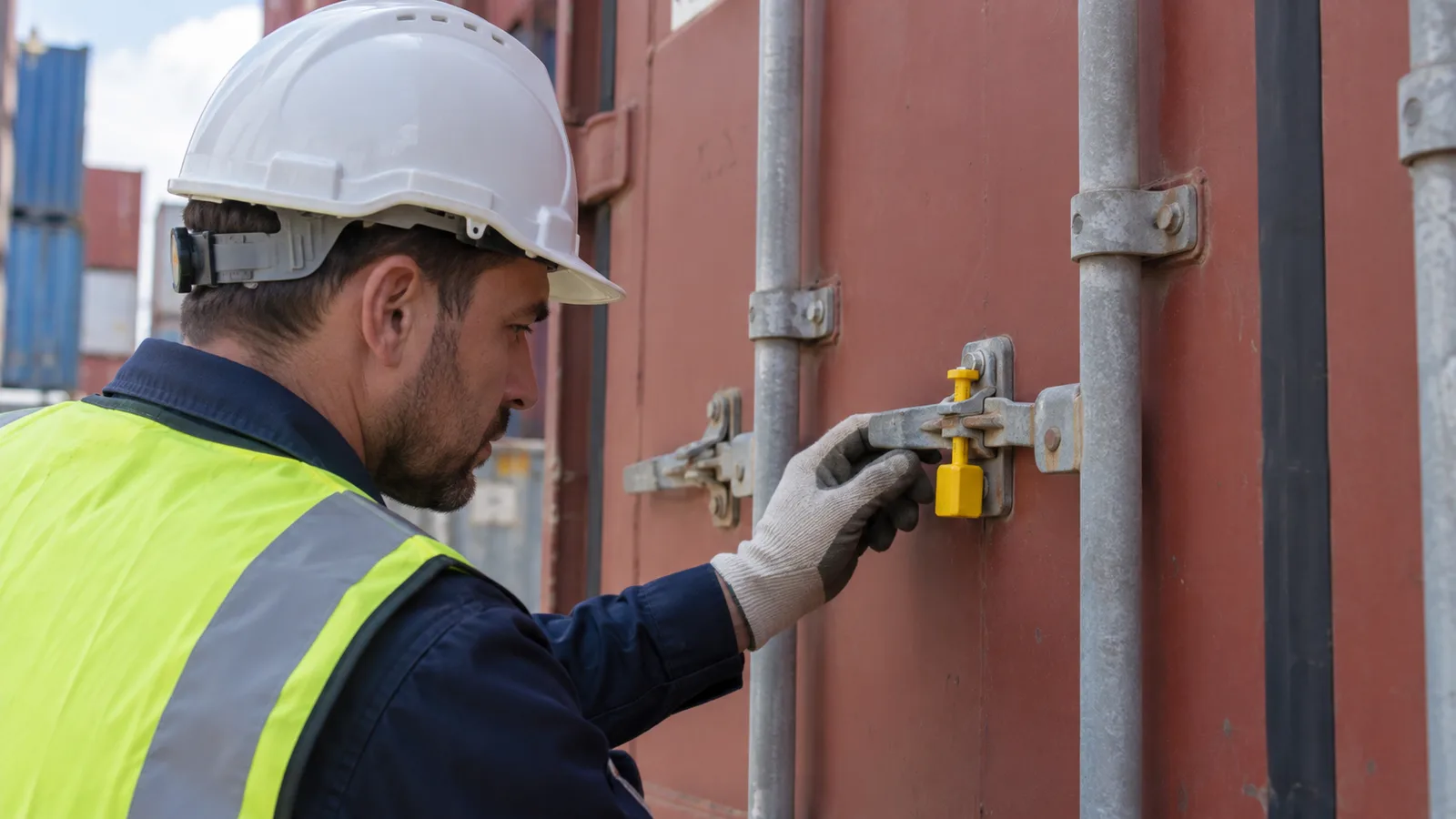
Prepare a seal inspection record and a clear escalation process.
A seal number connects the record to a particular closure
Before a container reaches the warehouse, the receiving team needs its identifiers and a contact for discrepancies. “Container sealed” is insufficient: the team needs the documented number, the number actually observed and any confirmed changes during transport.
An intact seal does not prove that the contents are complete, undamaged or correctly packed. A different number does not by itself establish theft either. An authorised inspection may have involved resealing, but the explanation needs supporting evidence.
Record the seal after packing
Assign someone to record the container and seal numbers after closure. An internal record can connect them to the shipment reference, location, date and a clear photograph of the closed doors. A distant image of the whole vehicle rarely provides a readable seal number.
Pass the number into the shipping documentation as required by the carrier. Check its transfer into the document draft. Do not reconstruct an unclear character from memory; consult the original record and the person who made the check.
Compare the physical unit with the documents
The 2014 CTU Code addresses identification checks and reporting missing, damaged or mismatched seals. The warehouse’s operating procedure must also reflect the operator’s instructions and any customs control.
A practical receiving record can include:
- the container number read from the unit;
- the seal number in the document and the number observed;
- inspection location, date, time and time zone;
- a factual description of the doors and closure;
- photographs and the recipient of the discrepancy report.
First establish that the paperwork concerns the correct container. A different container identifier is not simply a typing error in a seal field.
Example: a different seal at the warehouse
This example is fictional. Delivery paperwork shows seal A123, while the receiving employee sees B456. The doors are closed. The driver says that an inspection took place en route.
Record both numbers and identify the driver’s statement as an explanation awaiting confirmation. Notify the carrier and shipper. Request the inspection record or confirmed resealing history: where, when, by whom and from which number to which replacement. If customs procedures apply, involve the appropriate representative or authority.
Do not silently replace A123 with B456 in the historical document. Identify who can authorise the next receiving and opening steps, and retain their instructions.
Preserve the history of a replacement
An authorised opening during transport creates information needed at subsequent handovers. An internal event log can contain the previous number, replacement number, reason for opening, supporting confirmation and parties informed.
Evidence may arrive later than the first operational message. Use “confirmation pending” until it has been checked. If the discrepancy is already known, tell the warehouse before the vehicle arrives. Otherwise the receiving team may unnecessarily reopen an issue that has already been documented elsewhere.
Matching numbers do not make unloading safe
Even after the seal issue is resolved, safe opening and unloading procedures remain essential. Cargo may press against the doors, and the atmosphere inside may be hazardous. Trained staff must use the site’s procedures and suitable equipment. This article is not an instruction for cutting security devices or entering a container.
If damage becomes apparent during unloading, create a separate damage record. Preserve photographs, receiving documents and communications without automatically blaming the last party to transport the unit.
Prepare the handover
Give the warehouse the identifiers, current documents and an escalation contact. Agree how reservations will be recorded and how decisions will be obtained outside normal office hours. Connect the seal procedure with container release and damage reporting so that staff can identify the next authorised action instead of improvising at the gate.
Sources and scope
- IMO/ILO/UNECE — CTU Code 2014, full textSource checked: 2026-09-13
2014 edition, chapters 8–9 and 11–13, annex 3: inspection, packing, moisture, securing and competence. The status of any later revision requires a separate check.
- Hapag-Lloyd — Cargo ClaimsSource checked: 2026-09-13
Carrier procedure: photographs, notification, inspection and case-dependent documents. Advertised response times are not payment guarantees.
Editorial information
Author: WR
Published · Published: 13/09/2026 · Content updated: 13/09/2026