
Cargo and equipment · Importer / Exporter / Freight forwarder
Reefer booking: agree the transport conditions first
Prepare product requirements, temperature instructions, ventilation, power and monitoring arrangements before booking a reefer.
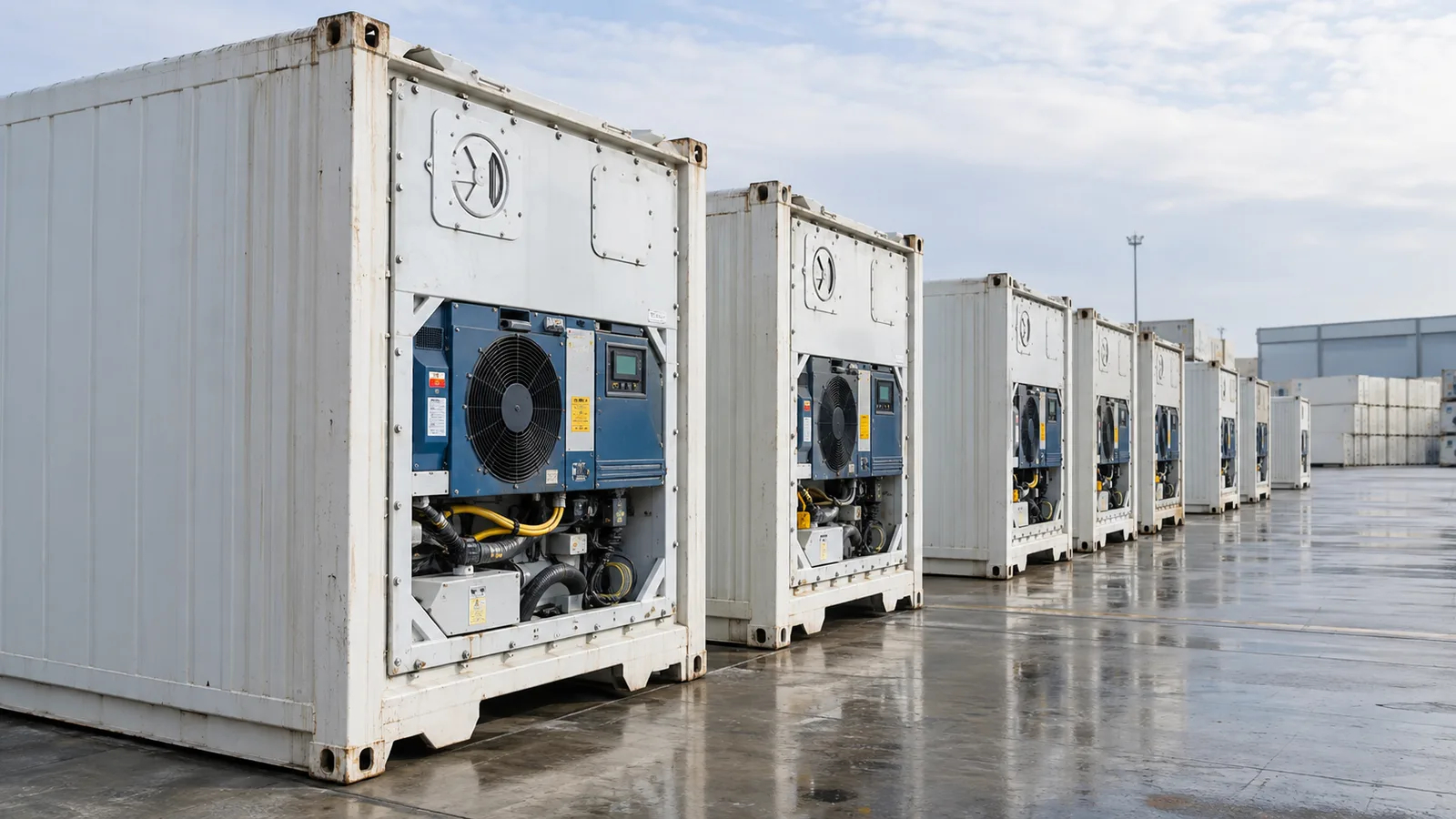
Create a transport-condition sheet for confirmation by the responsible parties.
Booking a reefer, or refrigerated container, takes more than a commodity name and “keep chilled”. You need confirmed product requirements and a plan for maintaining them from loading to receipt.
Do not copy the previous shipment's temperature setting. Similar products can have different needs, and the unit's set point is not the actual temperature of every part of the cargo.
Start with product requirements
Obtain written transport instructions from the manufacturer or person responsible for quality. They should define the product's required condition at loading, carrying temperature and permitted deviations where established.
Do not replace a missing value with “standard”. Where ventilation, humidity control, controlled atmosphere or another process is required, state units and the instruction's basis. Not every function is available on every unit.
The carrier should confirm feasibility for the proposed equipment and route. Specifying the product's needs and confirming operational delivery are different responsibilities.
Prepare a condition sheet
| Field | Information to agree |
|---|---|
| Product | Precise description, variety or specification, condition |
| Shipment | Quantity, weight, packaging and unit dimensions |
| Temperature | Required set point, unit and approving party |
| Loading condition | Required product temperature and confirmation method |
| Other settings | Ventilation, humidity, atmosphere or verified “not applicable” |
| Loading | Product-specific arrangement, packaging and airflow instructions |
| Route | Inland legs, terminals, transshipment and collection |
| Control | Measurements, record access, contact and alarm response |
| Additional requirements | Product documents and route-specific border procedures |
“Not applicable” should record a decision, not an unanswered question. Attach the same sheet version to the enquiry, booking and loading instructions.
Product, packaging and airflow work together
A refrigerated container does not automatically correct poorly prepared cargo. Hapag-Lloyd's handling guidance highlights product temperature before loading, packaging and airflow.
Agree a loading arrangement suitable for the commodity and unit. Do not transfer a dry-container layout without assessment. Using every geometrically available space does not necessarily support correct air circulation.
Cargexo's 3D planner can assist an initial dimensional check for supported equipment. It does not simulate refrigeration or establish temperature distribution. The article's illustration is not a reefer loading instruction.
Check every handover
Identify who provides power and checks during the trip to port, terminal stay, transshipment and final delivery. Confirm any inland power requirement and who supplies the relevant equipment.
Do not assume the ocean freight quote includes every inland refrigerated service. Ask about monitoring scope, power and additional handling charges, and waiting conditions. The consignee's warehouse must also be ready to receive the product correctly.
Customs, sanitary and phytosanitary requirements depend on the product and countries. Translation does not change their jurisdiction. Verify the requirements for the actual route before booking.
Monitoring does not automatically mean intervention
Agree what records are available: settings, unit sensor measurements or separate product loggers. One sensor's reading does not automatically describe every item in the shipment.
Ask about reporting frequency and delay, alarm notification and who decides what to do. Access to a carrier portal does not mean someone continuously watches the shipment on the shipper's behalf. This Cargexo module does not provide temperature monitoring.
Resolve conflicting instructions
In a fictional shipment, the quote states one set point and the manufacturer's later sheet another. Do not choose a value “just in case” or average them. Hold approval of the inconsistent instruction, obtain the responsible person's decision and circulate one corrected version to the operators.
After a parameter change, reassess equipment acceptance, route and costs. Retain earlier versions as history while clearly identifying the active instruction.
Before confirming the booking
- Product requirements identify their source and units.
- The carrier has confirmed operational feasibility.
- The warehouse knows the required cargo condition and loading plan.
- Power and checks have owners throughout the route.
- The consignee has confirmed receiving conditions.
- Alarm response and access to records are agreed.
Please assess [product specification] on [route/dates] against the attached condition sheet [version]. Confirm equipment and handling compatibility, power and control scope on each leg, record access and the deviation-reporting procedure. Unconfirmed parameters: [list]. Please do not replace them with default settings.
Sources and scope
- Hapag-Lloyd — Reefer cargoSource checked: 2026-09-13
Carrier reefer service. Cargo requirements determine equipment and settings; no single temperature is suitable for every product.
- Hapag-Lloyd — Reefer Cargo HandlingSource checked: 2026-09-13
Product temperature before loading, packaging and airflow in this carrier guidance; no universal settings or layout approval.
Editorial information
Author: WR
Published · Published: 13/09/2026 · Content updated: 13/09/2026