
Cargo and equipment · Importer / Exporter / Freight forwarder
SOC or COC: your container or carrier-provided equipment
Compare SOC and COC transport through equipment acceptance, documentation, total costs and the plan after delivery.
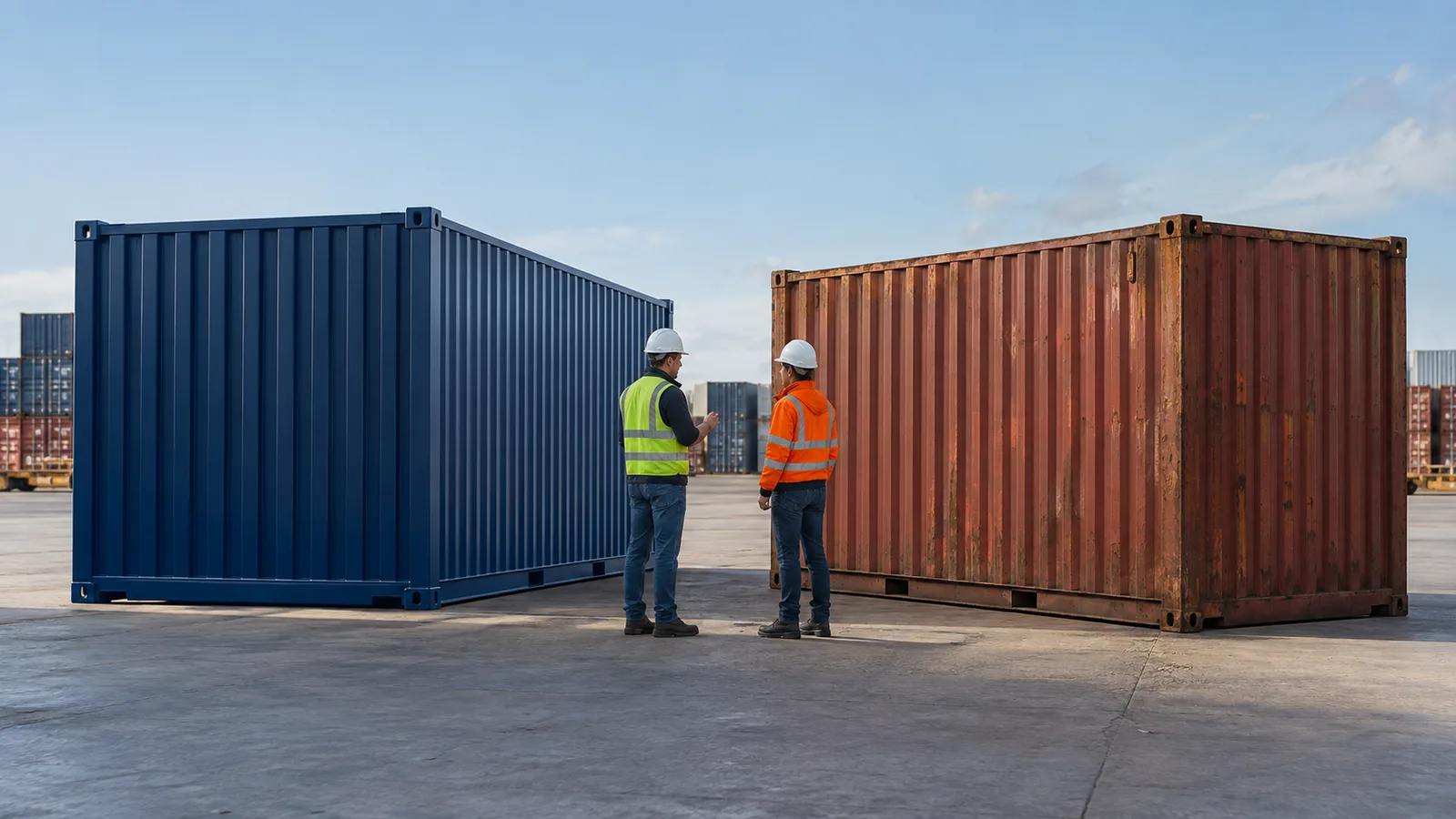
Build a question list before buying or leasing a container for ocean transport.
Start with responsibility for the equipment
COC stands for Carrier Owned Container; SOC stands for Shipper Owned Container. Operationally, establish who supplies the equipment for the particular service and arranges its next use. Carrier-provided equipment may be leased rather than legally owned by the carrier. A customer-supplied SOC may also be rented.
Confirm how the carrier will classify the actual unit and which quotation applies. Buying a container first can leave the business with equipment that cannot be used on the intended service.
Ownership does not establish suitability
A purchase document records a commercial transaction, not technical acceptance for transport. The unit’s condition, identification, required approvals and the operators’ requirements along the route matter.
The CSC Convention concerns container safety, including approval, maintenance and examination. A photograph of the plate alone does not resolve every question about current condition. Uncertainty requires competent assessment and confirmation of the carrier’s requirements.
Hapag-Lloyd publishes a separate SOC procedure dated 2025 and SOC transport terms. These are that carrier’s requirements, not universal acceptance by every line. Nonstandard units or departures from the stated criteria need advance disclosure. Refrigerated SOC equipment requires additional arrangements.
Prepare an equipment enquiry
Before purchase or rental, obtain information from the supplier for the carrier enquiry:
- number, type, dimensions, tare and owner or operator details;
- CSC documentation and information about the applicable examination scheme;
- plate and condition photographs, known deviations and repairs;
- cargo, mass, packaging and handling requirements;
- the complete route, inland legs and intended use after delivery.
Acknowledgement of an enquiry is not necessarily equipment acceptance. Record what has been reviewed, which evidence remains outstanding and which conditions must be met before terminal delivery.
Compare the full equipment cycle
For COC, establish empty collection, condition at handover, permitted use and return requirements. For SOC, establish procurement, empty positioning for packing, maintenance and the destination after unloading.
SOC does not remove terminal handling, storage, inland transport or documentation costs. Rental equipment may carry time, return, repair or repositioning charges under its contract. Do not transfer a COC tariff to SOC without checking its scope. Link each charge to a specific service, billing unit and trigger.
Separate equipment acquisition, transport and subsequent disposal or reuse in the comparison. Expected resale proceeds remain an assumption until there is a binding arrangement with a buyer. Include who pays each cost; moving it to another party does not remove it from the supply chain.
Example: keeping the container at a factory
This example is fictional. An importer wants to retain the container as storage after delivery. The comparison is between returning a COC after unloading and purchasing a SOC.
First obtain transport acceptance for the SOC. Then establish unloading or whole-unit lifting arrangements, suitable contractors and conditions for placing it on site. Separately clarify the container’s customs and tax treatment and local requirements for its intended use. Those obligations depend on the case and jurisdiction.
Only then does a cost comparison become useful. A difference in ocean freight does not include buying the equipment or the work required at the factory.
Plan beyond delivery
A SOC plan should identify retention, onward transport, resale or return to the lessor. Each option needs a location, responsible party and budget. Having no carrier-depot return obligation does not permit indefinite terminal storage without charges or restrictions.
Before booking, obtain a matching quotation, technical requirements and a confirmed post-delivery plan. A charge calculation can compare supplied commercial terms; it cannot approve equipment or interpret the rental agreement.
Sources and scope
- IMO — International Convention for Safe ContainersSource checked: 2026-09-13
CSC container safety convention. Ownership does not remove equipment condition, inspection or acceptance requirements.
- Hapag-Lloyd — SOC booking procedure 2025Source checked: 2026-09-13
One carrier’s procedure: equipment, CSC, deviations and additional reefer arrangements; not universal acceptance.
- Hapag-Lloyd — Shipper Owned Container TermsSource checked: 2026-09-13
Carrier-specific SOC quotation and carriage conditions; SOC does not imply absence of all charges.
- Maersk — Terms for Detention and DemurrageSource checked: 2026-09-13
Maersk terms, subject to country and contract. Separate and combined periods exist; free time and terminal storage must be checked for the actual shipment.
Editorial information
Author: WR
Published · Published: 13/09/2026 · Content updated: 13/09/2026